Wednesday, January 30, 2013

Baking Bread or Waiting For A Sale; The Art of Exercising Patience

The carved wooden bread tray has been calling my name for years.  Its simple smooth sides with a shape that hugs the finest of baguettes.  The warmth of its timber so inviting. Must ... not....succumb to its pricey beauty.  I kept telling myself the $5.00 bread basket I already have has dutifully served my needs for years.

WAIT A MINUTE...a sale! Let me check....


Could it be? Are my eyes deceiving me? The handsome treasure is on sale. Sold along with a few other needed items! Sorry little $5 bread basket. You'll find a good life with another family.


To begin with, the tray really didn't cost much ($25).  A purchase of this nature seemed like a little luxury I was having a hard time justifying.  But put that baby on sale by 25% all the justifying in the world was easy to come by.  For example I could use it as a lovely centerpiece in addition to being a mere bread tray.  Just saying....


By waiting for the right price point (in my head), my now wooden bread tray was chosen with love.

Can't the same be said for the tray's original purpose?  A freshly homemade baguette nesting in the tray only further symbolizes the rewards of exercising patience. 

Anyone can go buy a ready made baguette these days.  To really appreciate a good loaf as I readily do, I attack making bread myself.  You may remember my love affair on this subject, if not click here.  Rolling up my sleeves this last weekend, I let time do its job and  made what I hope is the first of many homemade breads which will have a brief residence in my beloved tray.

Marc's Homemade 5 Grain Bread

Chef Marc Bauer

From the Dropping Acid: The Reflux Diet Cookbook & Cure


Ingredients
3 cups all-purpose flour
1 cup whole-wheat flour
1 1/4 cups water
1 tsp dry yeast or 1/2 oz fresh yeast
2 tsp honey
2 Tbsp sesame seeds
2 Tbsp pumpkin seeds
2 Tbsp flax seeds
2 Tbsp sunflower seeds
2 Tbsp rolled oats
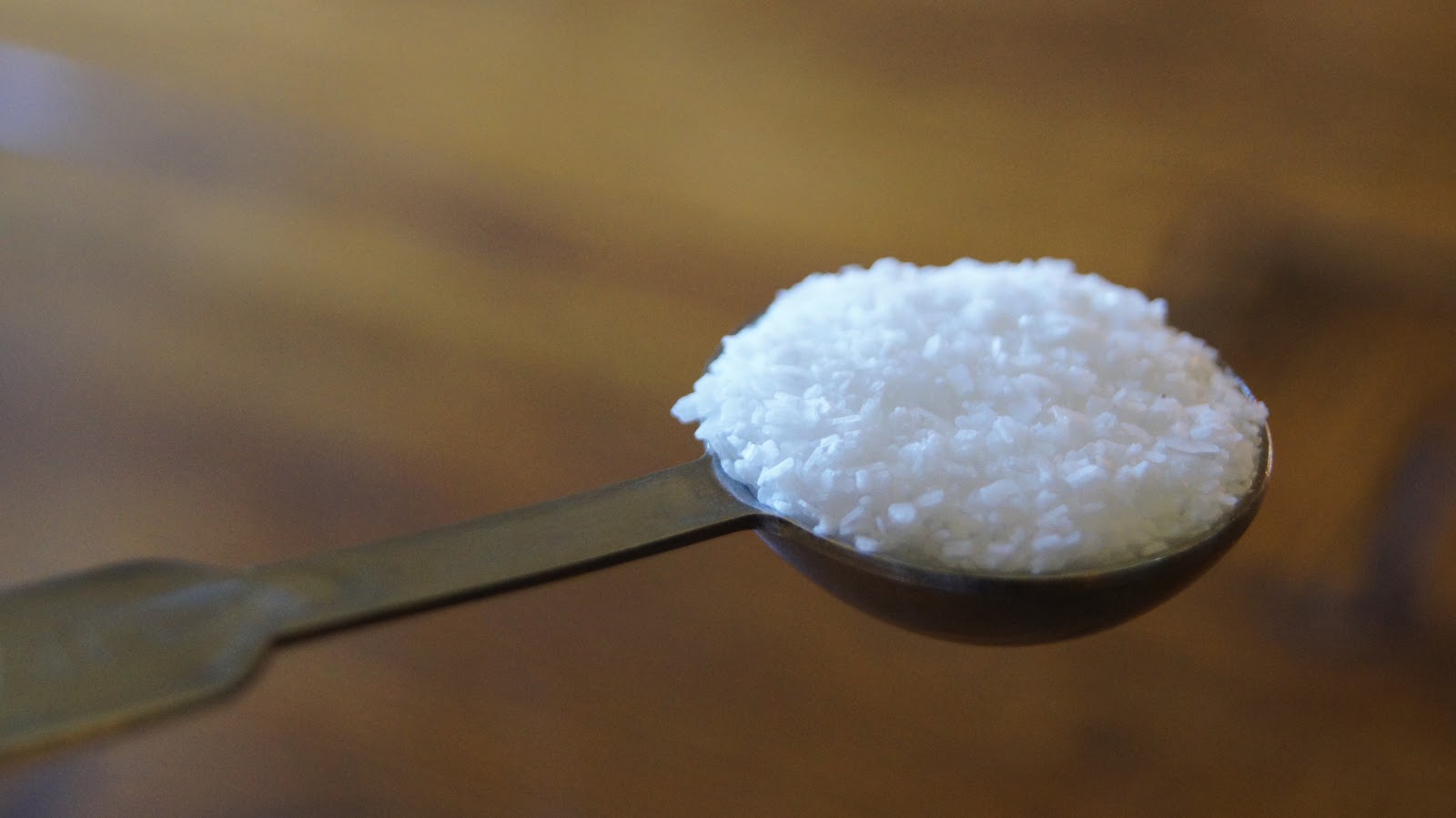
2 tsp salt

First, soak the sesame, pumpkin, flax, rolled oats and sunflower seeds in warm water for 20 minutes.  Then drain.


Mix the two flours with the water, yeast and honey for 2 minutes in a mixer using the bread hook attachment.  Let rest for 20 minutes.


 Add two tablespoons salt and the soaked seeds to the flour mixture.  Mix for 5 minutes. 


Cover and let rest for 15 minutes at a minimum temperature of 72 degrees F.

Turn out onto a floured work surface.  Shape into an 8" loaf by first flattening the dough into a rectangle about 8x5 inches, then rolling it up toward the 8" side.


Place in a 8" loaf pan or free-style it on a jelly roll pan that has been oiled or use a silpat.  Cover and keep warm, about 72-77 degrees F, until the dough doubles in volume.  I let it sit for another good hour.

Remove the cover and place in a pre-heated oven of 425 degrees, baking 25 minutes.  If using a convection oven, lower heat to 400 degrees and bake 20 minutes or until the crust is golden brown.


Remove immediately from pan and let rest for 15 minutes before enjoying.

What a satisfying reward in overcoming a few of life's impatient moments.

Sunday, January 6, 2013

Taking Stock ... A Cook's Connection

Guest Blogger, John Avey

I was in the kitchen the other day doing one of my favorite and admittedly mindless tasks -- chopping up stuff I was going to use to make a stock. Carrots, celery, onions, herbs, garlic gloves and a chicken carcass were all going into a big pot and in a couple of hours we would have a gallon of stock to use as needed. My favorite knife, a glass of wine close by and slowly sipped, music low in the background and my thoughts free to run through the tall grass of my imagination.


Suddenly, I was transported back to some Medieval castle kitchen!  There, in my minds eye, a cook, one of many in the large room -- knife in hand -- slowly chopping away at vegetables from the local lord’s garden -- all by candlelight.  I smiled at the thought -- this connection to a past time, person and place I could never have known -- doing essentially the very same task I was doing today.


Is there anything else we do today that is even remotely the same as it was centuries ago? Transport this long ago sous chef to my home today and imagine their confusion -- abundant fresh water, both hot and cold.


Magical blue flames constant from somewhere deep underground.


Or a big shiny box that is freezing cold inside and tiny bright orbs that light the darkness! Yet, I could hand over the knife, point to the boiling pot and stock makings -- I suspect they would know just what to do!


Then, like some Hollywood special effect, I time-warped 500 years into the future. Somewhere, someone was standing at a cutting board with a sharp knife and cutting vegetables to go in a stock.  The same task seen from a vastly different time and place.


That was when it struck me.  I loved this mindless task because it is so timeless.  It has not changed in a millennia and hopefully will not change in the next.  Preparing my stock connected me to the past in a way no written story could have.  There is a ton of information about past cooking techniques but there wasn’t a Medieval Anthony Bourdian documenting the gritty day-in day-out view of ancient cooking.

And what about that future sous chef?  Will he or she suddenly find themselves wondering about food prep in the year 2013?

Maybe with all these digital scribblings, they will not have to wonder.  They will know...


John's Homemade Stock Guidelines


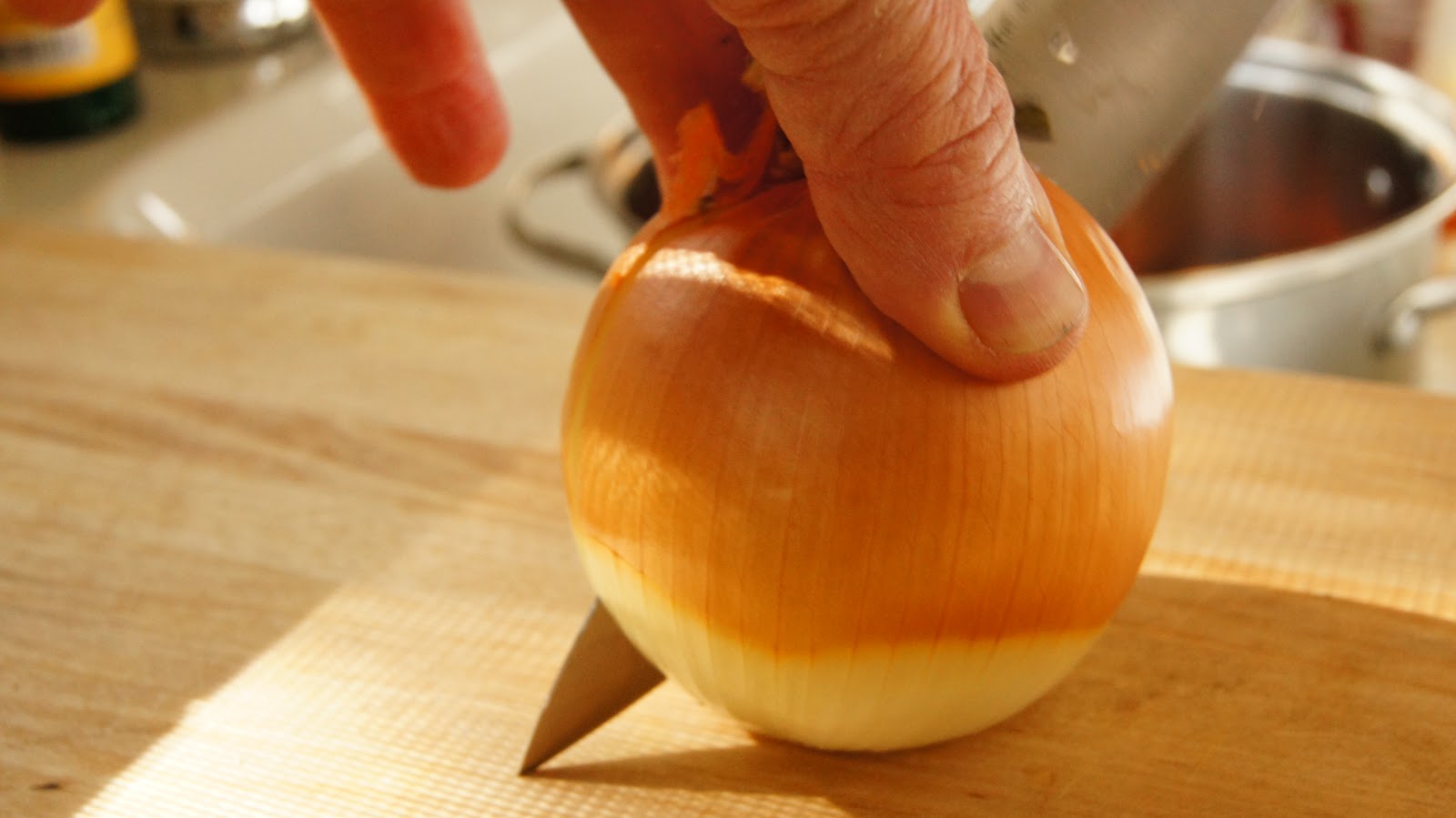
Carrot, celery, onion, leek, garlic, fresh herbs, a bay leaf, peppercorns and meat bones/cartilage are all useful to flavor a stock.  Roughly chop to fit in a large stockpot.


Add water, enough to cover all of the goodies you just threw in the pot.


Season with kosher salt.  Bring to a boil.  Then lower to simmer covered for an hour and a half.  Our proxy supervisor keeps a watchful eye.


All the goodness is now permeated into the broth.


Lift out with a spider all the chopped ingredients and discard.


Pour the stock through cheesecloth to another pot to clear out any loose bits.


Save your broth into Mason Jars for future meal making.  Yes, there the Aveys go again with the Mason Jars....

Monday, December 31, 2012

Foodscaping in LA

A day filled with food, architecture, design and art make for a complete and soul satisfying day for me.  Had I had any idea all of this could be accomplished in L.A, I would have sought it our earlier.  I had no idea there was neighborhood gentrification going on just east of downtown L.A.  I had no idea my city had developed an Arts District in that neighborhood.  I had no idea this gentrified warehouse district, now known as the Arts District is the home of many new and old food based businesses. 

Biscuit Company Lofts, formerly The National Biscuit Company West Coast Headquarters
Then again, when you live in Los Angeles, one tends to stick within their 5 mile radius to avoid traffic. What a shame.

Burning off the last couple of vacation days of 2012, John and I opted for a staycation.  What to do so it feels like we actually took a vacation?  We took a chance on a random email invite from the Foodprint Project to take a foodscape mapping walk of downtown LA's new and old food related businesses.  What is the Foodprint Project you ask? 
Foodprint Project is an exploration of the ways food and cities give shape to one another. Founded by Nicola Twilley and Sarah Rich, the project is punctuated by a series of events in physical space.  Foodprintproject.com
We've done walking tours of other cities.  Why not do one our own town?   Even more intriguing, we could participate in mapping what we're seeing in real time with our cell phones.  How hipsterish!


This BID (Building Improvement District), aka Warehouse/Arts District has really been in transition for  decades.  What started out as citrus groves in the late 1800's, turning into rail yards for centralized warehouse goods distribution to abandoned old-school industrial spaces is now a burgeoning, thriving hub of artistic green living.

Old Rail Spur Turned to Strolling and Dining Charm
The zoning, existing building stock and the neighborhood had the right combination to encourage this urban center to become home to artists' live/work studios.


Food artisans naturally are attracted to the same environs creating a new wave of creative food-based businesses.

Remember our food mapping project?  Over 50 people participated on the walk.  For those who wanted to participate, we live texted pictures to a central website of what we were seeing along the way.  At the end of our journey we would be able to see our collective pictures documenting our experience.

Let's get started.  Our first stop, a caffeine artisan.  Handsome Coffee Roasters goals include being hospitable, accessible and giving uncompromising quality. Roasted on site, co-owner Tyler Wells graciously opened up their workroom to show off their antique beauty of a roaster to us. 


A coffee tidbit according to Tyler, you shouldn't have to doctor up coffee (i.e. sugar, cream, etc) to make it taste palatable. A good cup of coffee means the roasted beans haven't been burnt. You know who he's talking about if you've been to any top visited coffee chain.

Along the way to our next destination, the friendly neighborhood greeter...


A work in progress, the couple behind The Spirit Guild describe their vision of making craft liquor from California's own abundant source of sugar, fruit.  Standing in front of their newly acquired workspace, their description neatly fits the definition of the farm to table movement.  Their distillery is slated to open in 2013.  Yes, they will have a tasting room, pending permitting of course.

Site of the Future Spirit Guild

As in any gentrifying urban neighborhood can attest to,  groceries can be hard to come by.  Even though the district's residential population is growing leaps and bounds, there is no grocery store; a food desert.  For now, most residents are making weekly treks to Pasadena 12 miles away.  That will soon change.

Mural by Street Artist, Peter Roa

Local Arts District residents Keri Aivazis and Carolyn Paxton have made the steep investment of retrofitting the old warehouse above into a future food market.  The ginormous chipmunk mural painted as a Los Angeles Freewalls Project will be retained.   It will be known as the Urban Radish where most items will be locally sourced and finely curated.  Knowing their typical consumer, it will have a full range of pricing and small packaging for living in a small urban kitchen.


A Sneak Peek at the Plans

Metal Shed to Retrofitted Building Housing a Grocery Store
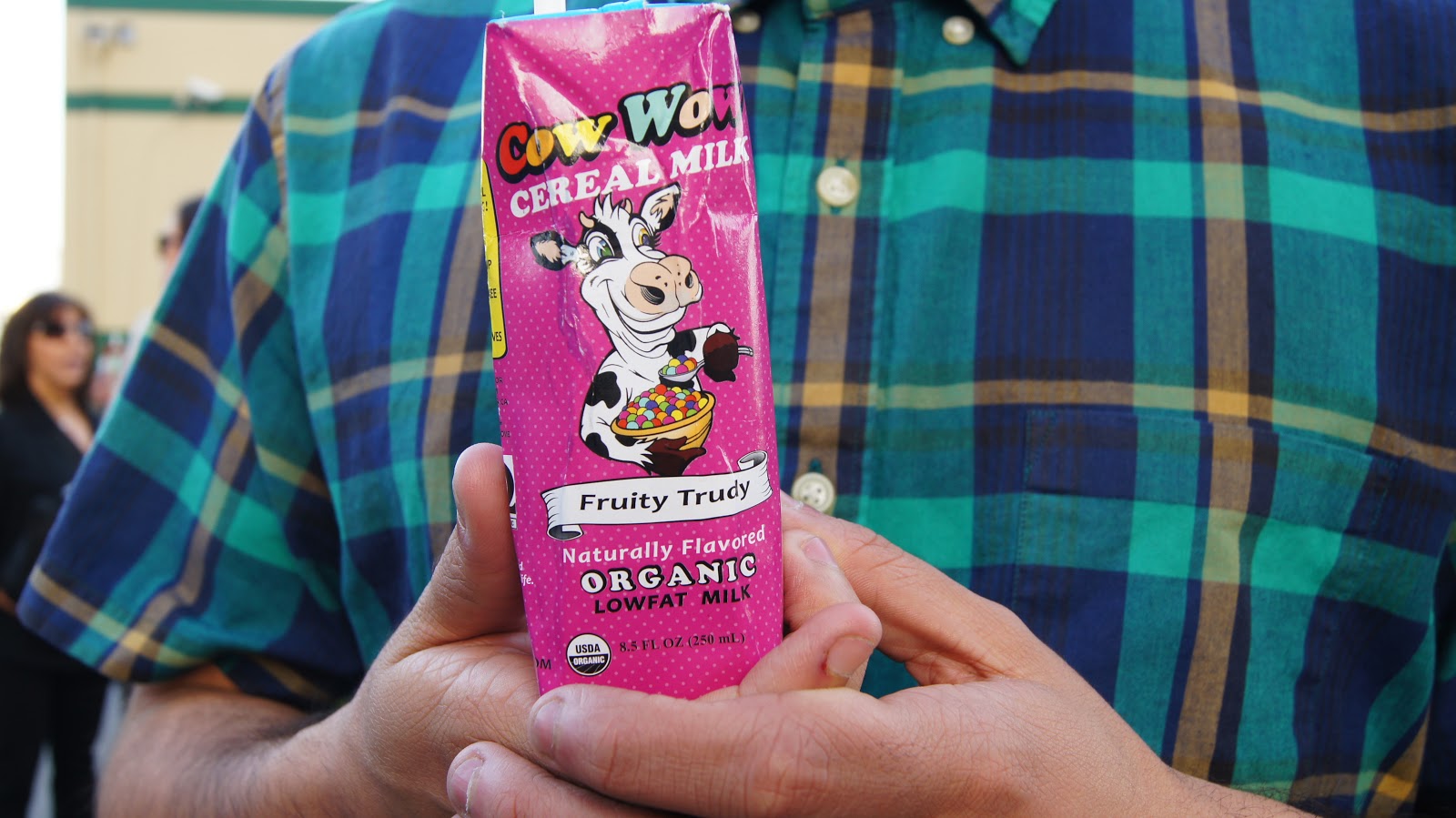
Not all food artisans are requiring a store front.  Instead of eating Fruit Loops, why not have your healthy cereal accompanied by Cow Wow organic milk tasting like Fruit Loops.  Best way to get the word out at the moment, be a street vendor.


Our food culture requires mass food warehousing before final distribution.  Imagine trying to feed over 12 million people in the LA metro area and beyond.  We visited one such cold storage business.


Up & Coming Chefs Ask this Warehouse for the Next Hot Item, Edible Herb Crystals

The end of our tour led us to the latest entree to the District, Beastia.  Less than 2 months old, head chef Ori Menashe makes everything from scratch including curing his own meats.  If only I could share with you the tremendous smells emanating from this restaurant. 


After our adventurous walk we ended at Villain's Tavern for happy hour, where we viewed (and you can too) our collective mapping activity led by civic media and gaming researcher, Benjamin Stokes.  Seeing what we had just witnessed through other people's lenses made the journey all the more interesting.

Once again life proves taking a chance on doing something out of the ordinary can deliver its greatest rewards.  That very statement has given me a moment of clarity and an idea about the future of this blog.   Stay tuned .....

Happy New Year!
Related Posts Plugin for WordPress, Blogger...
Powered By Blogger